Opening Hours
- Warrawong Hours:
Monday
8AM - 5PM
Tuesday
9AM - 5PM
Wednesday
9AM - 5PM
Thursday
9AM - 5PM
Friday
8AM - 5PM
Saturday
9AM - 12PM
Sunday
CLOSED
- Wollongong Hours:
Monday
8AM - 5PM
Tuesday
9AM - 5PM
Wednesday
9AM - 5PM
Thursday
CLOSED
Friday
8AM - 5PM
Saturday
9AM - 12PM
Sunday
CLOSED
Our Locations
- 166 Cowper St, Warrawong NSW 2502
- 68/143 Corrimal St, Wollongong NSW 2500

Bespoke Dental Studio caters to all patients of all ages. We pride ourselves as true family dentists. We cater to all forms of general dentistry, as well as cosmetic and restorative dentistry. We are proud providers for the Illawarra Area Health Service.
We provide :
- CDBS
- IAHS Vouchers
- Vet Affairs
- Emergency Appointments
Tooth Extractions
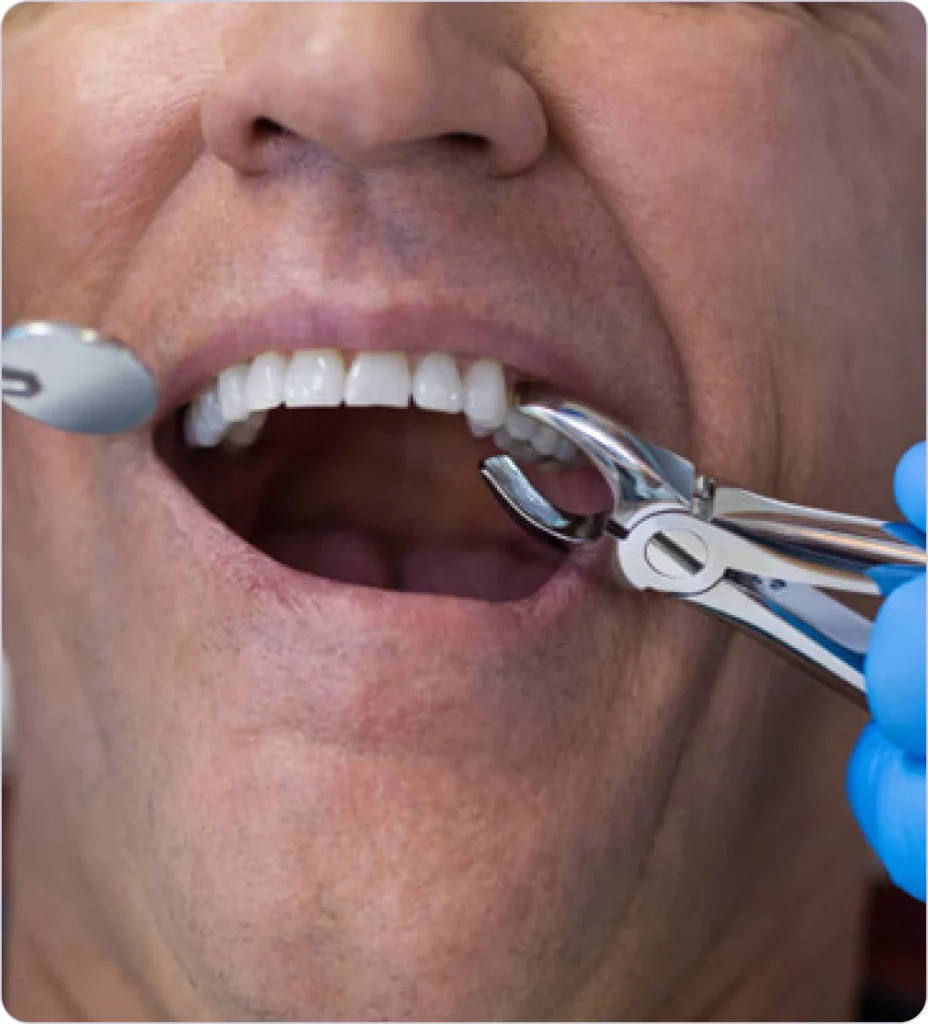
Although permanent teeth were made to last a lifetime, sometimes an extraction may become necessary. Tooth extraction is the removal of a tooth from its socket in the bone. If you are facing a tooth extraction, it can seem a little daunting and nerve-wracking. But did you know that tooth extraction is a fairly standard dental procedure?
At Bespoke Dental Studio, we provide tooth extractions at our Wollongong and Warrawong practices when removing a tooth is considered the most appropriate treatment option.

When Is Tooth Extraction Necessary?
In many cases, teeth that are broken or damaged by decay can be fixed with a filling, crown, or other dental treatment. Sometimes, though, the damage is too severe to repair.
An extraction may become necessary if:
- Decay has reached deep into the tooth
- Infection has destroyed a large portion of the tooth or the surrounding bone
- There isn’t enough room for all the teeth in your mouth
- Baby teeth don't fall out in time for the permanent teeth to come in
- People getting braces or other orthodontic treatment may need teeth extracted to create room for the teeth that will be moved into place
- Wisdom teeth, also called third molars, are often extracted either before or after they come in during the late teens or early 20s.
Tooth Extraction Process
Simple Extraction
A simple extraction is performed on a tooth that can be seen in the mouth. These are generally performed under local anaesthesia in the dental chair. They are removed with the aid of dental forceps.
Surgical extraction
A surgical extraction is a more complex procedure that is used for a tooth that may have broken off at the gumline or has not come through the gums as yet. This type of extraction can be performed under local or general anaesthesia. During a surgical extraction, a small incision (cut) is made into your gum to remove the underlying tooth. Sometimes some of the bone around the tooth will also need to be removed or the tooth may need to be cut in half to extract it.
Wisdom teeth extractions are a good example of a surgical extraction.
Surgical extractions may sometimes need to be referred to a specialist Maxillo-Facial surgeon.
Our dentists in Wollongong and Warrawong can assess your tooth and determine whether a simple or surgical extraction may be required.
After the Extraction
Once the tooth has been pulled, a blood clot usually forms in the socket. Sometimes the dentist will place a few stitches to close the gum edges over the extraction site.
Sometimes, the blood clot in the socket breaks loose, exposing the bone in the socket. This is a painful condition called dry socket. If this happens, a dressing will be placed over the socket for a few days to protect it as a new clot forms.
The most important thing to remember after a tooth extraction is to keep the area clean to prevent infection. Immediately following the procedure, you will be asked to bite down gently on a piece of dry, sterile gauze, which you should keep in place for 20-30 minutes to limit bleeding, while clotting takes place. For the next 24 hours, you shouldn't smoke or rinse your mouth vigorously. You should also limit strenuous activity, as well as avoid hot liquids.
It is best to eat soft foods for at least 24 hours after an extraction and gradually re-introduce solid foods as the extraction site heals.
There may be some pain and discomfort following an extraction. In some cases a pain killer will be prescribed. It might also help to apply an ice pack to your cheek for 15 minutes at a time. Under normal circumstances, discomfort should lessen within three days to two weeks. However, if you experience prolonged or severe pain, swelling, bleeding, or fever, please call us immediately.

Need more information? Contact the experts today!
Frequently Asked Questions
What does a wisdom tooth extraction involve?
Extraction may be straightforward or surgical. Simple removal uses local anaesthetic to extract visible, stable teeth, while impacted or partially erupted teeth may require minor surgery—such as soft tissue removal, bone trimming or tooth sectioning. Sedation options are available if needed.
Why is wisdom tooth extraction recommended?
Extraction is advised when wisdom teeth cause pain, infection (pericoronitis), crowding, decay or damage to adjacent teeth. Treating teeth before root formation is complete often reduces surgical risks and speeds recovery.
What should I expect during recovery?
You might experience mild swelling and discomfort for several days. During recovery, follow instructions such as using ice packs, eating soft foods, maintaining oral hygiene gently, and avoiding straws or smoking. A follow-up visit is recommended to check healing and manage discomfort.