Opening Hours
- Warrawong Hours:
Monday
8AM - 5PM
Tuesday
9AM - 5PM
Wednesday
9AM - 5PM
Thursday
9AM - 5PM
Friday
8AM - 5PM
Saturday
9AM - 12PM
Sunday
CLOSED
- Wollongong Hours:
Monday
8AM - 5PM
Tuesday
9AM - 5PM
Wednesday
9AM - 5PM
Thursday
CLOSED
Friday
8AM - 5PM
Saturday
9AM - 12PM
Sunday
CLOSED
Our Locations
- 166 Cowper St, Warrawong NSW 2502
- 68/143 Corrimal St, Wollongong NSW 2500

Bespoke Dental Studio caters to all patients of all ages. We pride ourselves as true family dentists. We cater to all forms of general dentistry, as well as cosmetic and restorative dentistry. We are proud providers for the Illawarra Area Health Service.
We provide :
- CDBS
- IAHS Vouchers
- Vet Affairs
- Emergency Appointments
Wisdom Teeth Removal in Wollongong and Warrawong
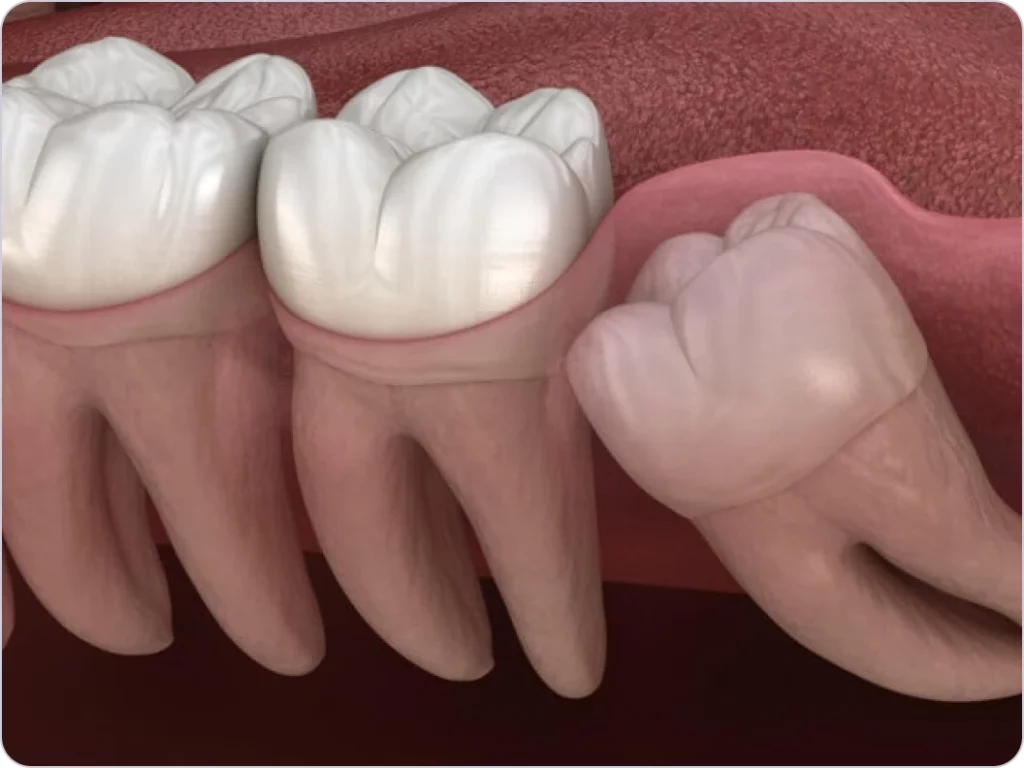
Wisdom teeth are also known as third molars Most people have four wisdom teeth which appear from late adolescence to mid-twenties. However, there’s nothing unusual about only having a couple, or never getting any. The number of wisdom teeth you have is not a problem. The problem may arise when your wisdom teeth try to come through. Unfortunately, sometimes wisdom teeth do not erupt correctly and can cause severe pain or discomfort. In this situation, the best option may be to have them extracted.
At Bespoke Dental Studio, our dentists in Wollongong and Warrawong can assess your wisdom teeth and discuss whether removal may be appropriate for you.

Reasons for Wisdom Tooth Extraction:
They’re impacted. Because they're so far back in your mouth, wisdom teeth may not come in normally. They can be trapped in your jawbone or gums, which can bel painful.
They come in at the wrong angle. They may press against your other teeth and causel pain.
Crowding. Your jaw has no room for an extra set of molars or you may not want to compromise the alignment of your teeth after orthodonticl treatment.
You have cavities or gum disease. You may not be able to reach your wisdom teeth with your toothbrush or dental floss.
Do I Need to See A Specialist to Extract Wisdom Teeth?
This depends on the complexity of the case.
Generally, you do not need a specialist to remove your wisdom teeth. Most wisdom teeth extractions can be performed by a skilled general dentist. However, if there is a great degree of impaction or if the roots are close to your nerves, a specialist referral will be given to a maxillo-facial surgeon.
Our Wollongong and Warrawong dentists can assess the complexity of your case and advise whether treatment can be provided at the practice or if a specialist referral is recommended.
How are Wisdom Teeth Removed?
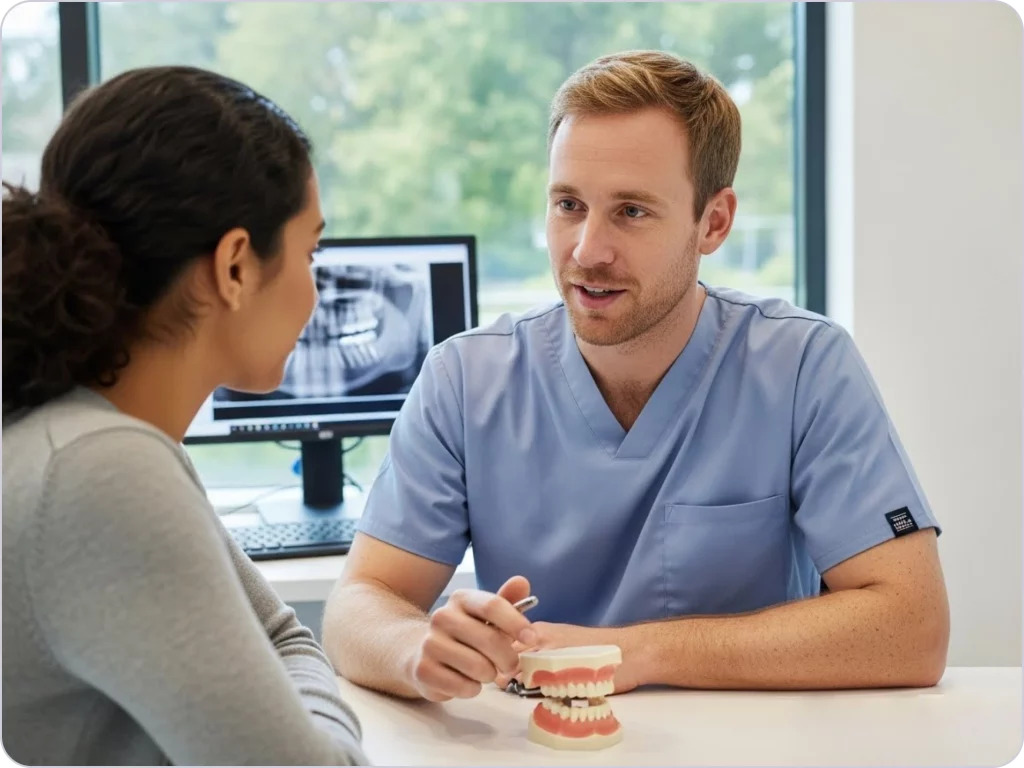
Depending on the severity of your wisdom teeth issues, either your dentist or an oral maxillofacial surgeon will perform the wisdom teeth extraction.
Your dentist will give you a local anaesthetic to numb the tooth extraction site. A general anaesthetic may be used for multiple wisdom teeth extraction.
The dentist or surgeon will open the gum tissue over and surrounding your tooth, or teeth, to assist with removal. They may need to cut bone around the tooth. After your wisdom tooth is extracted and the extraction site has been stitched, a cotton gauze pad will be applied to help stop the bleeding.
Essential Post-Removal Care
Post-operative care is very important. Unnecessary pain and the complications of infection and swelling can be minimized if the instructions are followed carefully.
Immediate Post-Op (The First Hour)
- The gauze pad placed over the surgical area should be kept in place for a half hour. After this time, the gauze pad should be removed and discarded.
- Vigorous mouth rinsing or touching the wound area following surgery should be avoided. This may initiate bleeding by causing the blood clot that has formed to become dislodged.
- Take the prescribed pain medications as soon as you begin to feel discomfort.
- Restrict your activities the day of surgery and resume normal activity when you feel comfortable.
- Place ice packs on the side of your face where surgery was performed.
Bleeding
Swelling around the mouth, cheeks, eyes and sides of the face is not uncommon. Swelling and mild bruising is normally expected and is usually proportional to the surgery involved. This is the body’s normal reaction to surgery and eventual repair. Many times the swelling will not become apparent until the day following surgery and will not reach its maximum until 2-3 days post-operatively. However, the swelling may be minimized by the immediate use of ice packs. A bag filled with ice, or ice packs should be applied to the sides of the face where surgery was performed. The ice packs should be left on continuously while you are awake. After the first 24-to-36 hours, ice has little beneficial effect to reduce&nsbp;swelling.
Swelling
Swelling around the mouth, cheeks, eyes and sides of the face is not uncommon. Swelling and mild bruising is normally expected and is usually proportional to the surgery involved. This is the body’s normal reaction to surgery and eventual repair. Many times the swelling will not become apparent until the day following surgery and will not reach its maximum until 2-3 days post-operatively. However, the swelling may be minimized by the immediate use of ice packs. A bag filled with ice, or ice packs should be applied to the sides of the face where surgery was performed. The ice packs should be left on continuously while you are awake. After the first 24-to-36 hours, ice has little beneficial effect to reduce swelling.
Keep the mouth clean
No vigorous rinsing should be performed until the day following surgery. You can brush your teeth the night of surgery, but rinse gently. The day after surgery you should begin rinsing at least 5-6 times a day, especially after eating, with a cup of warm water mixed with a teaspoon of salt.
Diet & Prescriptions
Eat only soft foods, such as yogurt or soup, for the first 24 hours. Start eating semisoft foods when you can tolerate them. Avoid hard, chewy, hot or spicy foods that might get stuck in the socket or irritate the wound. Drink lots of water after the surgery. Don't drink alcoholic, caffeinated, carbonated or hot beverages in the first 24 hours. Don't drink with a straw for at least a week because the sucking action can dislodge the blood clot from the socket. Do not smoke for at least 72 hours post surgery.
You will very likely be prescribed pain killers and antibiotics. Take these as directed.
Sutures
Sutures are placed in the area of surgery to minimize post-operative bleeding and to help healing. The sutures will dissolve or be removed approximately one week after surgery. The removal of sutures requires no anaesthesia or needles. The procedure takes only a minute or so, and there is minimal discomfort associated with this procedure.
There will be a hole or opening where the tooth was removed. In the coming months the cavity will gradually fill in with the new tissue. In the meantime, the area should be kept clean, especially after meals, with salt water rinses or a toothbrush.
Possible Risks of Wisdom Tooth Removal
Most wisdom tooth extractions don't result in long-term complications. However, removal of impacted wisdom teeth occasionally requires a surgical approach that involves making an incision in the gum tissue and removing bone. Rarely, complications can include:
Painful dry socket, or exposure of bone when the post-surgical blood clot is lost from the site of the surgical wound (socket).
Infection in the socket from bacteria or trapped food particles.
Damage to nearby teeth, nerves, jawbone or sinuse
Need more information? Contact the experts today!
Frequently Asked Questions
What are wisdom teeth and why might they need to be removed?
Wisdom teeth are the third molars that usually appear between the late teens and mid-twenties. They may require removal if they are impacted, misaligned, cause crowding, or lead to pain, swelling, or infection.
Do I need a specialist to remove wisdom teeth?
In most cases, a general dentist can safely remove wisdom teeth. However, if the teeth are deeply impacted or located near nerves or sinuses, referral to a specialist may be advised.
What should I expect during treatment and recovery?
Wisdom teeth removal is typically performed under local anaesthetic or sedation. After the procedure, it’s normal to experience swelling, mild discomfort, and limited jaw movement. Recovery usually involves rest, soft foods, ice packs, and good oral hygiene.