
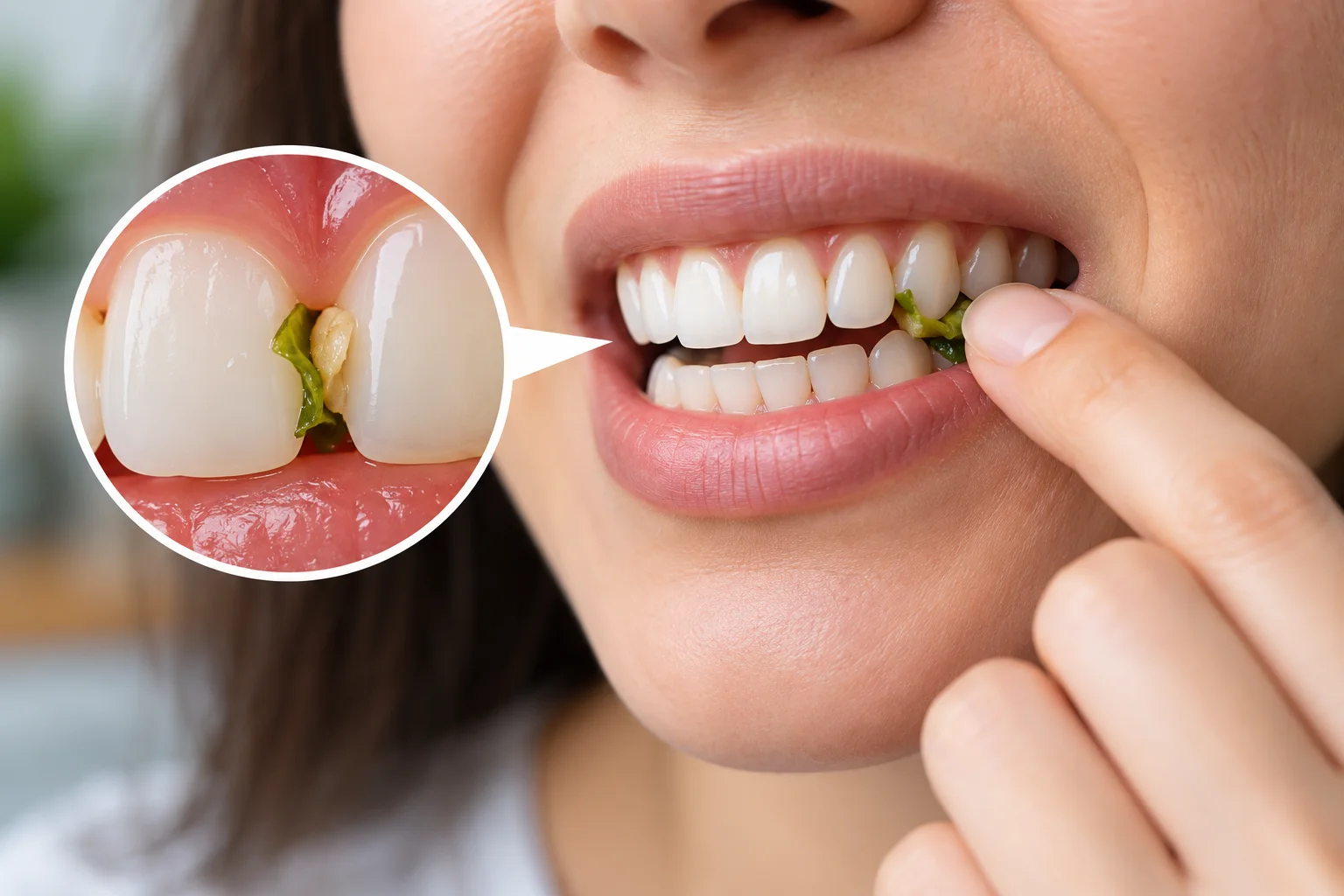
Why Does Food Keep Getting Stuck Between My Teeth?
You finish a meal, run your tongue along your teeth, and there it is again: something wedged in the same spot it always seems to land.
If food keeps getting stuck between your teeth, particularly in the same area, there is often an underlying reason. It may relate to the spacing or shape of your teeth, changes in the gums, previous dental work or the way neighbouring teeth contact each other.
At Bespoke Dental Studio, patients from Warrawong, Wollongong and surrounding areas often mention recurring food trapping during dental visits. While occasional food getting caught between teeth is common, repeated trapping in one spot is worth paying attention to.
Here are some of the common reasons it happens and when a dental assessment may be useful.
Gaps Between Teeth Are a Common Cause
Small gaps between teeth are one of the most common reasons food repeatedly becomes trapped in the same place.
Even a narrow space can provide enough room for fibrous foods, such as meat or leafy vegetables, to become wedged between neighbouring teeth.
Some gaps are part of your natural tooth spacing. Others may become more noticeable over time if teeth shift or if the contact point between two teeth changes.
Once there is enough space for food to enter repeatedly, trapping in that location can become a regular pattern rather than an occasional inconvenience.
A dentist can assess whether the space is simply part of your natural tooth arrangement or whether another factor is contributing.
Tooth Shape and Wear Can Play a Role
Teeth vary naturally in size, shape and contour.
Some teeth have grooves, ridges or uneven surfaces that can make food more likely to catch around them. The shape of the contact point between two neighbouring teeth can also affect how easily food becomes trapped.
Everyday wear may gradually change tooth surfaces and contact areas as well. In some cases, this can create a small space that was not previously noticeable.
If food trapping has developed recently, a dentist can check whether tooth wear, movement or another change has affected the way the teeth meet.
Gum Recession Can Open New Spaces
Healthy gum tissue normally fills much of the space around and between teeth.
When the gums recede, part of that tissue moves away from its previous position. This may create additional space near the gumline where food can collect.
Gum recession can have several contributing factors, including gum disease and brushing habits. Healthdirect Australia’s information on gum disease explains that receding gums can occur with periodontal disease and may be accompanied by symptoms such as bleeding gums, swelling, bad breath or loose teeth.
Food trapping caused by gum recession may develop gradually, so you might first notice the problem while eating before recognising any visible change in the gumline.
If you have noticed increasing spaces between your teeth, bleeding gums or other gum changes, professional assessment is recommended rather than assuming the cause.
Old or Worn Dental Work
Fillings, crowns and other dental restorations can change over time.
A restoration may wear, chip or no longer create the same contact with the neighbouring tooth that it once did. If this leaves a small opening between teeth, food may begin collecting there.
Food trapping does not necessarily mean a filling or crown has failed. However, a new problem occurring around a tooth with previous dental work is worth mentioning during a dental examination.
A dentist can examine the restoration, surrounding teeth and contact point to determine whether treatment is needed.
Missing Teeth Can Change How Neighbouring Teeth Sit
When a tooth is missing, neighbouring teeth may gradually move or tilt towards the open space.
These changes can alter the contact points between teeth and create new areas where food becomes trapped.
How much movement occurs varies between individuals and depends on factors such as which tooth is missing, the surrounding teeth and the bite.
If food trapping has developed near a missing tooth, a dentist can assess the area and discuss whether the changing tooth position is contributing.
Why Cleaning Between Your Teeth Matters
Brushing is essential for oral health, but a toothbrush cannot effectively clean every tight space between neighbouring teeth.
Dental floss and other interdental cleaning methods are designed to reach areas that toothbrush bristles may miss. Healthdirect Australia’s dental care guidance explains that flossing helps remove food particles and plaque bacteria from between teeth and recommends cleaning between the teeth daily.
Regular interdental cleaning can help remove trapped food before it remains around the gums for an extended period.
Depending on the size of the spaces between your teeth, suitable options may include:
- Dental floss
- Dental tape
- Interdental brushes
- A water flosser
The most appropriate method can vary depending on your teeth and gums. Your dentist or dental hygienist can demonstrate a cleaning technique suited to your individual needs.
What Can You Do When Food Keeps Getting Stuck?
A few practical habits may help manage recurring food trapping.
Clean Between Your Teeth Daily
Use floss or another interdental cleaning method recommended by your dental professional. Gently guide floss around the sides of each tooth rather than snapping it into the gums.
Consider an Interdental Brush
For wider spaces, an appropriately sized interdental brush may be easier to use than standard floss.
The brush should fit comfortably rather than being forced through a tight space. Your dental professional can advise on a suitable size if you are unsure.
Rinse With Water After Eating
Rinsing your mouth with plain water may help dislodge loose food particles when you cannot clean between your teeth immediately.
It does not replace brushing or interdental cleaning, but it can be a useful temporary step after meals.
Avoid Sharp Objects
Try not to remove trapped food with sharp or improvised objects.
Toothpicks or other pointed objects can potentially injure the gums or tooth surfaces if used aggressively. Healthdirect advises that dental floss or appropriate interdental cleaning tools are preferable for cleaning between teeth.
Pay Attention to Repeated Food Trapping
If food consistently becomes trapped in exactly the same location despite regular cleaning, consider having the area assessed.
Repeated trapping can sometimes indicate a gap, changed contact point, gum recession, tooth movement or a problem around existing dental work.
When Is It Worth Seeing a Dentist?
Occasional food trapping happens to many people, particularly with fibrous foods.
However, recurring food trapping in one location may be worth investigating, especially if the problem is new, getting worse or becoming difficult to manage at home.
Arrange a dental assessment if food trapping occurs alongside:
- Bleeding or swollen gums
- Persistent bad breath or an unpleasant taste
- Gum recession
- Tooth sensitivity
- Toothache
- A loose filling or crown
- Teeth that seem to have moved
- Loose teeth
- Difficulty cleaning the affected area
Our dental team at Bespoke Debental Studio can examine the teeth, gums, existing restorations and contact points to identify possible reasons food is repeatedly becoming trapped.
Treatment is not the same for every patient. Depending on the cause, your dentist may recommend changes to your cleaning technique, monitoring the area or dental treatment where clinically appropriate.
What to Remember
Food that repeatedly gets stuck between the same teeth usually has an explanation.
Possible causes include natural spacing, tooth shape, wear, gum recession, missing teeth, tooth movement or changes around existing dental work.
Daily flossing or another suitable interdental cleaning method can help remove trapped food, but cleaning alone will not necessarily correct an underlying gap or changed contact point.
If the same area keeps causing problems, contact Bespoke Dental Studio to arrange an assessment with our dentist in Warrawong or dentist in Wollongong. A dentist can identify the likely cause and discuss appropriate options based on your teeth, gums and individual circumstances.
FAQs
Why does food always get stuck between the same teeth?
Repeated food trapping in one location may be caused by a gap, a changed contact point between neighbouring teeth, gum recession, tooth movement or existing dental work. A dentist can examine the area to determine the likely cause.
Is it normal for food to get stuck between teeth?
Food occasionally becoming trapped between teeth is common. If it happens frequently in the same location, becomes difficult to clean or is accompanied by gum or tooth symptoms, it is worth having the area assessed.
Does flossing stop food from getting stuck between teeth?
Flossing can remove food and plaque from between teeth, but it does not close an existing gap or correct the underlying reason food is entering the space. If trapping continues despite regular cleaning, a dental assessment may help identify the cause.
Can gaps between teeth that trap food be treated?
Depending on the cause, size and location of the gap, treatment options may be available. The appropriate approach depends on factors such as tooth position, tooth shape, gum health, the bite and any existing dental work, so individual assessment is required.
Should I see a dentist if food keeps getting stuck in one spot?
Yes, particularly if the problem is recurring, new or getting worse. Persistent food trapping may be related to spacing, gum changes, tooth movement or a restoration, and a dentist can check the area and recommend suitable management.