
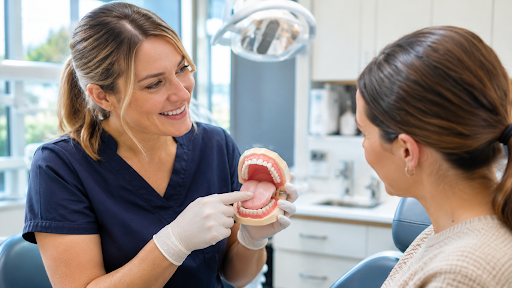
Why Does My Breath Smell Bad Even After Brushing?
Brushing your teeth should leave your mouth feeling clean.
So when your breath still smells bad afterwards, it can be frustrating. You might brush twice, use mouthwash, chew gum or avoid talking too closely to people, only for the smell to return.
Bad breath after brushing can happen for several reasons. Sometimes the cause is simple, such as food trapped between the teeth or bacteria accumulating on the tongue. Other times, persistent bad breath can be linked to gum disease, tooth decay, dry mouth, dental appliances or other health factors.
The important thing to understand is that bad breath is not always caused by poor brushing habits. However, if it keeps happening, it is worth finding out why.
This article explains common causes of halitosis, how oral bacteria contribute to bad breath and when to speak with a dentist.
What Is Halitosis?
Halitosis is the clinical term for bad breath.
Most people experience it at some point. Morning breath, garlic breath, coffee breath or breath changes after eating certain foods are all common. These usually improve after brushing, drinking water, eating or cleaning the mouth.
Persistent bad breath is different.
It does not settle easily. It may return soon after brushing or leave an unpleasant taste in the mouth. Some people notice it themselves, while others only become aware of it when someone mentions it.
This can feel embarrassing, but bad breath is a common concern. Rather than continually masking the odour, the aim is to identify what is causing it.
Why Can Breath Still Smell Bad After Brushing?
Brushing cleans the surfaces of your teeth, but it does not always clean every area of your mouth.
Bad breath can originate from different areas, including:
- The tongue
- Between the teeth
- Under the gumline
- Cavities
- Dental appliances
- Dry areas of the mouth
- Tonsils
- The nose, throat or other parts of the body in some cases
This is why brushing alone may not always resolve the problem.
If the smell comes from bacteria on the tongue, food trapped between teeth, gum inflammation or dry mouth, brushing may provide only temporary freshness.
Understanding the underlying cause is an important step towards managing persistent bad breath.
1. Bacteria on the Tongue
The tongue is one of the most common places for bad breath to originate.
Its surface contains small grooves and textured areas where bacteria, food particles and dead cells can accumulate. This is particularly common towards the back of the tongue.
These oral bacteria can produce unpleasant-smelling compounds.
Even if your teeth are clean, your breath may still smell bad if bacteria remain on the tongue.
You may notice a white, yellowish or coated appearance. However, bacteria can still be present even when the tongue looks normal.
Gently cleaning your tongue with a toothbrush or tongue scraper may help reduce this build-up.
Avoid scrubbing too hard, as excessive pressure can irritate the tongue and make your mouth feel sore.
2. Food Trapped Between the Teeth
Brushing does not always remove food particles from between your teeth.
Small pieces of food can remain trapped in tight spaces, around fillings, near crowns or between crowded teeth.
As food breaks down, bacteria feed on it and can produce unpleasant odours.
This is one reason bad breath can persist even when your teeth appear clean.
If you do not clean between your teeth regularly, plaque and food debris can accumulate in areas your toothbrush cannot reach.
Floss, interdental brushes or other cleaning aids may help, depending on the spaces between your teeth.
Not every cleaning tool is suitable for every person. If flossing is difficult or interdental brushes do not fit comfortably, your dentist or oral health therapist can recommend an appropriate technique.
3. Gum Disease or Gingivitis
Persistent bad breath can sometimes indicate that your gums need attention.
When plaque accumulates around the gumline, the gums may become irritated and inflamed.
This early stage of gum disease is called gingivitis.
Common signs may include:
- Bleeding when brushing or flossing
- Red or swollen gums
- Gum tenderness
- Persistent bad breath
- An unpleasant taste in the mouth
Some people experience little or no pain during the early stages of gum disease.
If gum disease progresses, deeper spaces may develop between the teeth and gums. These areas can trap bacteria and become more difficult to clean at home.
This is why a dental assessment is important when bad breath keeps returning.
A dentist can examine your gums, assess plaque and tartar accumulation and recommend appropriate care based on the findings.
4. Tooth Decay or Dental Infection
A cavity can create an area where bacteria and food particles become trapped.
During the early stages, tooth decay may not cause noticeable pain.
However, as a cavity develops, it may collect debris and contribute to unpleasant breath or a persistent bad taste.
Dental infections can also affect breath odour, particularly when accompanied by swelling, pus, discomfort or sensitivity.
Sometimes symptoms are intermittent, while other cases may initially cause little discomfort.
If you experience persistent bad breath alongside toothache, swelling, sensitivity, a pimple-like bump on the gum or pain when biting, arrange a dental appointment promptly.
A dentist needs to assess the affected area before recommending treatment.
If swelling is rapidly spreading or you experience difficulty swallowing or breathing, seek emergency medical attention.
5. Dry Mouth
Saliva helps wash away food particles and bacteria.
When your mouth becomes dry, bacteria can accumulate more easily. This may contribute to bad breath and other symptoms.
You might notice:
- A sticky or dry feeling in your mouth
- A dry or coated tongue
- Cracked lips
- Frequent thirst
- Difficulty swallowing dry foods
- Persistent unpleasant breath
Dry mouth can occur for several reasons, including:
- Mouth breathing
- Snoring
- Dehydration
- Certain medications
- Smoking or vaping
- Some medical conditions
- Stress
- Reduced saliva production
Morning breath is often more noticeable because saliva production naturally decreases during sleep.
However, if your mouth regularly feels dry during the day, this may be contributing to ongoing bad breath.
Drinking water may help relieve dryness, but it may not address the underlying cause.
If dry mouth continues, speak with your dentist. They can assess your oral health and recommend appropriate ways to manage symptoms.
6. Mouthwash That Only Masks the Problem
Mouthwash can temporarily make your breath smell fresher.
However, not every mouthwash addresses the underlying cause of bad breath.
Some products primarily mask odours with flavouring, while others contain ingredients that may help reduce oral bacteria.
Certain alcohol-containing mouthwashes may also contribute to a dry feeling in the mouth for some people.
Mouthwash should not replace:
- Brushing with fluoride toothpaste
- Cleaning between your teeth
- Gentle tongue cleaning
- Regular dental examinations
If you find yourself frequently using mouthwash to cover persistent bad breath, it may be time to investigate the cause rather than relying on temporary freshness.
7. Dental Appliances
Retainers, dentures, mouthguards, aligners and night splints can accumulate bacteria when they are not cleaned properly.
Even if you brush your teeth, an unclean appliance can contribute to unpleasant odours.
This may be particularly noticeable with appliances worn overnight or stored without appropriate cleaning.
Clean your dental appliance according to your dentist’s instructions.
Avoid using hot water unless specifically recommended, as heat may distort certain appliance materials.
If your appliance continues to smell unpleasant despite cleaning, bring it to your dental appointment.
Your dentist can assess whether it requires additional cleaning, adjustment or replacement.
8. Smoking or Vaping
Smoking and vaping can contribute to bad breath in several ways.
They may leave odours in the mouth, affect saliva production, cause dryness and increase the risk of oral health problems.
Smoking is also associated with gum disease.
In some cases, smoking can make gum disease less noticeable because it may reduce bleeding, even when the gums are unhealthy.
If persistent bad breath occurs alongside smoking or vaping, discuss this with your dentist.
They can assess your oral health and provide appropriate advice about the factors that may be contributing to the problem.
9. Tonsil Stones, Sinus Issues or Throat Problems
Not all bad breath originates from the teeth and gums.
Tonsil stones can form when debris becomes trapped within small spaces in the tonsils.
They may contribute to an unpleasant smell, a bad taste or the sensation that something is stuck in your throat.
Other potential contributing factors include:
- Sinus congestion
- Post-nasal drip
- Throat infections
- Persistent mouth breathing
- Certain nasal or sinus conditions
If a dental examination does not identify an oral cause of persistent bad breath, your dentist may suggest speaking with your GP.
This may be particularly important if you also experience ongoing sinus symptoms, a sore throat, fever, persistent coughing or other health changes.
10. Reflux or Other Medical Causes
Sometimes persistent bad breath may be related to health concerns outside the mouth.
Reflux, certain digestive conditions, diabetes, kidney or liver conditions and some medications can affect breath odour.
These are not the most common explanations for bad breath, but they may be relevant when dental causes have been ruled out.
A dental examination is often a useful first step because many cases of persistent bad breath originate in the mouth.
If your dentist finds that your oral health is generally satisfactory but the problem continues, they may recommend further medical assessment.
What Can You Do at Home to Manage Bad Breath?
If your breath continues to smell unpleasant after brushing, start with a consistent oral hygiene routine.
Several everyday habits may help reduce the bacteria and food debris that contribute to bad breath.
Brush Properly Twice a Day
Brush your teeth for two minutes, twice daily, using fluoride toothpaste.
Pay attention to the gumline, back teeth and areas that are easy to miss.
Brushing harder does not necessarily clean more effectively. Gentle, thorough brushing is preferable to aggressive scrubbing, which may irritate gums or contribute to tooth wear.
Clean Between Your Teeth
If plaque and food particles remain between your teeth, brushing alone may not remove them.
Floss, interdental brushes or other appropriate cleaning aids can help reach these spaces.
The most suitable option depends on your teeth and gum health.
If you are unsure which method to use, ask your dentist or oral health therapist for advice.
Clean Your Tongue
Gently clean your tongue regularly, particularly towards the back where bacteria may accumulate.
You can use a soft toothbrush or a tongue scraper.
Avoid applying excessive pressure or scraping until your tongue becomes painful or bleeds.
Drink Water Regularly
Water helps rinse away food particles and supports normal saliva function.
Drinking water throughout the day may help relieve mild dryness and reduce the accumulation of food debris.
However, persistent dry mouth may require further assessment to identify its cause.
Reduce Frequent Snacking
Frequent snacking, particularly on sugary or sticky foods, can encourage bacterial activity in the mouth.
This does not mean you need to avoid every snack.
However, limiting how often your teeth are exposed to sugary foods and drinks may support better oral health.
Clean Dental Appliances Daily
If you wear a retainer, aligner, denture, mouthguard or night splint, clean it according to the instructions provided by your dental professional.
Unpleasant odours may originate from the appliance rather than your teeth.
Regular cleaning and appropriate storage can help reduce bacterial accumulation.
When Should You See a Dentist for Bad Breath?
Arrange a dental appointment if:
- Your bad breath continues despite brushing and flossing
- You notice bleeding gums
- Your gums appear red, swollen or tender
- You have a persistent unpleasant taste
- You experience tooth pain or sensitivity
- Food repeatedly becomes trapped in the same area
- Your dental appliance develops an unpleasant odour
- Your mouth frequently feels dry
- Someone else repeatedly notices your bad breath
At Bespoke Dental Studio, patients can arrange a dental assessment to investigate possible oral causes of persistent bad breath.
For patients in Warrawong, Wollongong and surrounding areas, an examination may help identify whether the problem is related to plaque accumulation, gum inflammation, tooth decay, dry mouth or another concern requiring further assessment.
How a Dentist Can Help With Persistent Bad Breath
A dental appointment for bad breath usually involves examining your mouth and discussing your symptoms.
Your dentist may:
- Check your teeth for decay or trapped food
- Assess your gums for inflammation or signs of gum disease
- Look for plaque and tartar accumulation
- Examine your tongue and other oral tissues
- Review your brushing and interdental cleaning routine
- Ask about dry mouth, medication, smoking, diet and relevant medical history
- Check dental appliances where applicable
- Recommend professional cleaning when appropriate
- Suggest changes to your oral hygiene routine
- Recommend further medical assessment if necessary
There is no single treatment that addresses every cause of bad breath.
For some people, professional cleaning and improvements to daily oral hygiene may help.
For others, treatment for gum disease, tooth decay, dry mouth or another underlying condition may be required.
The dental team at Bespoke Dental Studio can assess your oral health, explain their findings and discuss appropriate treatment options based on your individual needs.
A Fresh Mouth Starts With Finding the Cause
Bad breath after brushing can be frustrating, particularly when you already follow a regular oral hygiene routine.
The cause may be as simple as bacteria on your tongue or food trapped between your teeth. It may also be linked to gum disease, tooth decay, dry mouth, dental appliances or other health factors.
If your breath continues to smell unpleasant despite brushing, the next step is to have your mouth assessed.
Once the cause has been identified, your dentist can explain whether changes to your home care routine, professional dental treatment or further assessment may help.
Bespoke Dental Studio supports patients from Warrawong, Wollongong and surrounding areas with dental examinations, professional cleaning and oral health advice tailored to their needs.
Contact Bespoke Dental Studio to arrange a dental appointment and discuss your concerns about persistent bad breath.
FAQs
Why does my breath smell bad even after brushing?
Bad breath after brushing can happen when bacteria remain on your tongue, food is trapped between your teeth, plaque accumulates around the gums or your mouth is dry. It may also be associated with tooth decay, gum disease, dental appliances or other health factors.
Is bad breath always caused by poor brushing?
No. Although inadequate brushing can contribute to bad breath, it is not the only cause. Persistent bad breath may also be associated with oral bacteria, gum inflammation, dry mouth, tonsil stones, sinus problems, reflux, certain medications or dental appliances.
Can gum disease cause persistent bad breath?
Yes. Gum disease can contribute to persistent bad breath because bacteria and plaque may accumulate around the gumline or within deeper spaces around the teeth. Bleeding gums, swelling and an unpleasant taste may also indicate that your gums need professional assessment.
Does mouthwash fix bad breath?
Mouthwash may temporarily freshen your breath, and some products can help reduce oral bacteria. However, it does not always address the underlying cause. If bad breath keeps returning, a dental assessment may help identify what is contributing to the problem.
Should I clean my tongue if I have bad breath?
Gentle tongue cleaning may help reduce bacteria and debris that contribute to unpleasant breath. You can use a soft toothbrush or tongue scraper, particularly towards the back of your tongue. Avoid excessive pressure that causes pain or irritation.
When should I see a dentist for bad breath?
Arrange a dental appointment if bad breath continues despite regular brushing, interdental cleaning and tongue cleaning. You should also seek advice if you experience bleeding gums, tooth pain, swelling, persistent dry mouth or an unpleasant taste that does not go away.